
Baby Won't Fall Asleep: What to Try Tonight
Some nights, everything seems ready but baby still will not fall asleep. You hold, settle, put them down, and start over. The fatigue rises, the tension follows, and every new attempt feels like a reset.
In those moments, the most helpful move is not to pile on ten new tricks. It is to come back to a simple sequence: reduce stimulation, add one stable cue, and give the routine a little time to work.
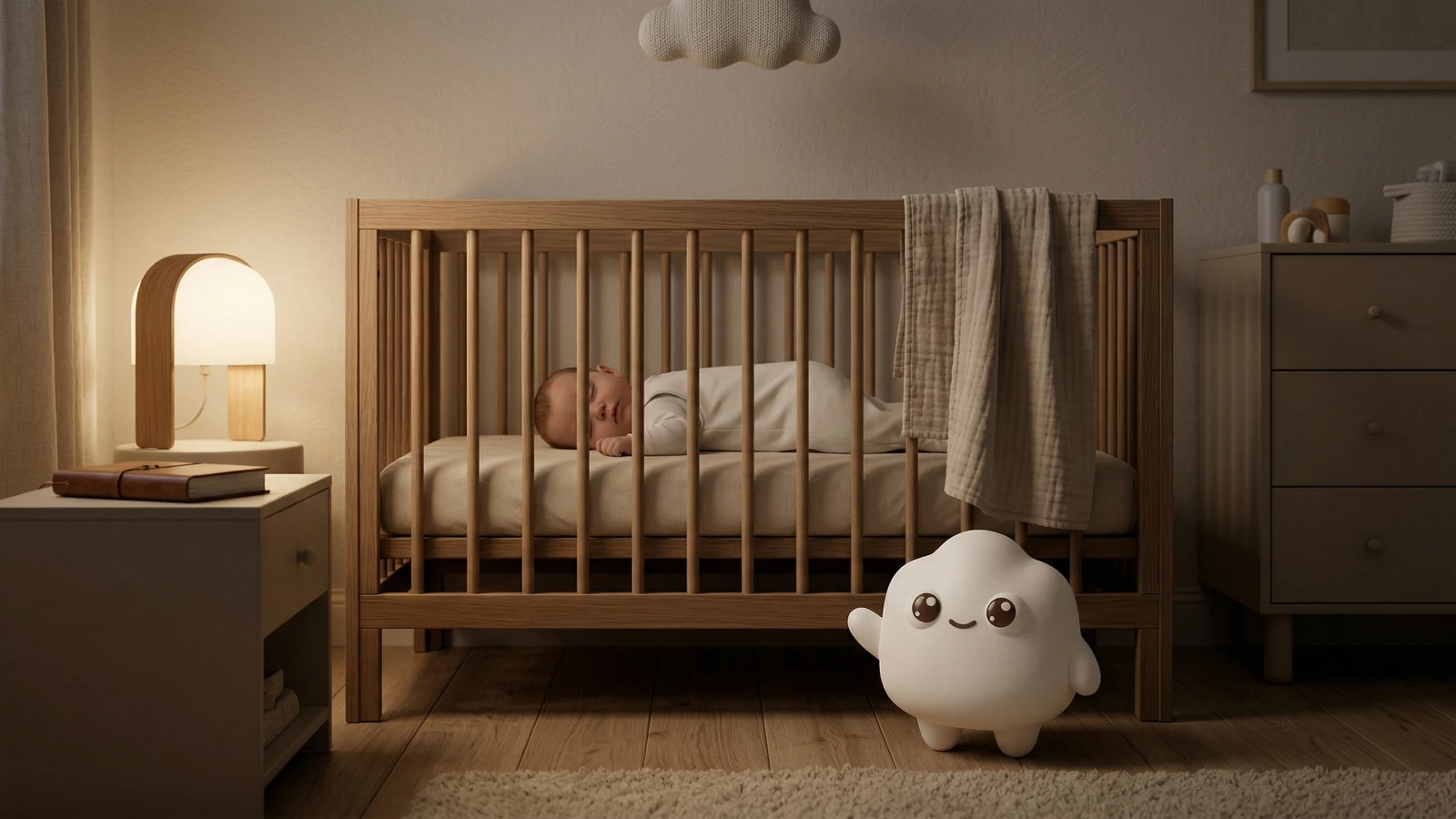
First, the short answer
If baby will not fall asleep tonight, start with these levers in this order:
- check the basics without restarting the whole evening
- lower stimulation in the room
- add one simple, stable cue such as background sound
- stay with the same approach for a few minutes before switching
The common trap is moving too fast from one solution to another. Many babies mainly need a more coherent environment, not a new stimulus every thirty seconds.
Why baby sometimes struggles to fall asleep
Too much stimulation right before bedtime
Lights, voices, screens, movement, and changing gestures can keep some babies from shifting smoothly into sleep mode.
A tired baby who is also overstimulated
Paradoxically, a very tired baby does not always fall asleep more easily. They can become more wired, more sensitive to transitions, and harder to settle.
A lack of stable cues
When every bedtime looks different, baby does not always get a clear signal that wake time is ending. A short, repeated structure often helps more than a string of new attempts.
What you can try tonight
The goal is not to reinvent everything. It is mostly to simplify. Here is a realistic sequence for a difficult evening:
- dim the room and reduce interaction to the minimum
- hold baby or keep a calm, containing presence nearby
- start one soft, continuous background sound, ideally the same one each time
- keep the same rhythm for a few minutes without adding more inputs
- if nothing settles, go back to the basics before restarting with a short routine
What is better to avoid
- •changing techniques every minute
- •turning on more light to "figure out what is happening"
- •adding music, toys, talking and movement all at once
- •assuming that more tired automatically means faster sleep
When baby is fighting sleep, layering stimulation usually creates the opposite of the calm you want.
When Mallow can help in this situation
Mallow does not replace your routine or your observation. What it can do is make hard bedtimes easier to manage when you want a steadier sound environment without handling your phone too much.
- •soothing sounds that are easy to restart during bedtime
- •an iPhone widget that removes extra steps at the key moment
- •a more consistent sound routine from one bedtime to the next
Frequently Asked Questions
How long should I try one method before changing it?
A few minutes is often enough to see whether baby starts to soften or settle. The goal is not to wait forever, but also not to switch after only a few seconds.
Can background sound really help with falling asleep?
Yes, for some babies. Not as a magic fix, but as a stable cue that lowers sound contrast and makes the environment feel more regular.
What if baby gets even more upset?
Then simplify even further. Reduce movement and input, come back to a calmer baseline, and make sure no basic need has been missed.
Does bedtime need to be exactly the same every night?
Not down to the second, but a similar structure helps a lot: same atmosphere, same overall order, same sound or soothing cue.
Read next
View the blogExplore soothing sounds for baby
See the feature page dedicated to sounds that help make bedtime feel more stable and predictable.
Set up the iPhone widget
Keep the right sound ready without adding extra taps at bedtime.
Read the white noise guide
Go deeper on how background sound can support bedtime when used in a simple, careful way.
Understand wake-ups from small noises
Continue with the article focused on babies who wake up when the sound environment changes.
Key cluster pages
Download Mallow on the App Store
When bedtime starts to drift, the most useful thing is often a routine that stays simple, stable and easy to restart.
Download Mallow on the App Store