
White Noise for Baby: Benefits, Limits & Best Practices
When baby wakes up at the slightest sound, white noise is one of the first suggestions parents hear. And for good reason: used well, it can genuinely make the sound environment calmer and settling easier.
But it is not magic, and it is not something to leave running without thinking. The most helpful approach is to understand what white noise can do, what it cannot do, and how to use it without making nights more complicated.
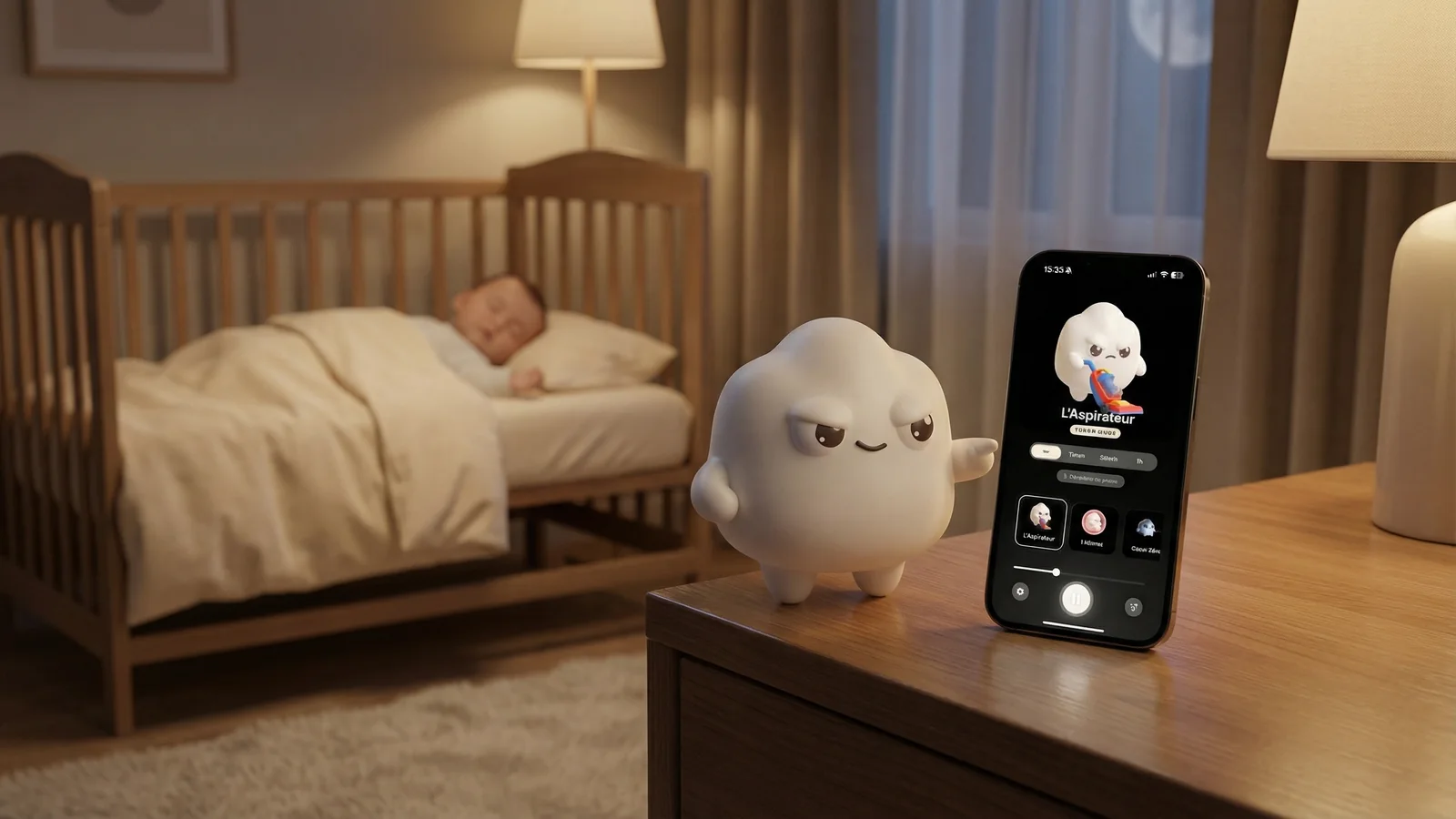
First, the short answer
Yes, white noise can help some babies, especially in three common situations:
- to mask sudden sounds that trigger startles or wake-ups
- to create a stable sound cue around bedtime
- to make the room feel less acoustically harsh when the environment is inconsistent
Its effect still varies from one baby to another. The most important part is volume, distance, and how it fits into the routine.
What white noise is actually useful for
Masking disruptive sounds
White noise creates a steady background layer. A door, floorboard, muffled voice, or traffic sound stands out less sharply when it lands on a consistent sound bed.
Making the room feel more stable
Some babies react badly to sound contrast. The jump from total silence to one random noise can be enough to wake them. A constant sound helps reduce that contrast.
Supporting the bedtime cue
Like dim light or a short wind-down ritual, a repeated sound can become a simple signal: things are slowing down and sleep is coming.
Its limits: what not to expect from it
- •White noise does not soothe every baby in the same way.
- •It does not solve hunger, pain, discomfort, or teething.
- •If the volume is too high or the source is too close, it becomes counterproductive.
- •Running it all night, every night, without stepping back is not always the best habit.
In other words, it is a useful environmental support, not a universal answer to every kind of crying or sleep difficulty.
White, pink, brown noise: does the difference matter?
White noise
This is the best-known option. It spreads energy quite evenly across frequencies and is very effective at masking sudden sounds.
Pink noise
Softer and less sharp, it is often easier to listen to for longer stretches. Many parents find it gentler in practice.
Brown noise
Deeper and more enveloping, it can suit babies who seem bothered by sounds that feel too hissy or too high.
In practice, there is no perfect color of noise. The right one is the sound your baby tolerates well at a moderate volume.
Best practices to keep in mind
If you want to try white noise calmly, keep the routine simple. You do not need ten settings. A few rules are enough.
- Start with the lowest effective volume.
- Do not place the sound source right against the bed or inside the crib.
- Test one sound at a time for a few minutes.
- Use it as routine support, not as the only answer to everything.
- Watch your baby more than the theory: some prefer rain, some a deeper sound, and some do better without any background sound.
When Mallow helps in a practical way
The value of Mallow is not only the sound itself. It is also the fact that it makes sound easier to use when you are tired and trying to avoid extra steps.
- •soothing sounds you can start without ads or interruptions
- •an iPhone widget for one-move access at night
- •cry detection for more continuity during fragmented nights
Frequently Asked Questions
Is white noise safe for babies?
Yes, when it is used with common sense: moderate volume, reasonable distance, and close observation of how your baby responds. If you are unsure, staying cautious is the right move.
Should white noise stay on all night?
Not necessarily. Many families use it mainly for settling or during harder nights. A timer or limited duration is enough in many situations.
White noise or pink noise: which one should I try first?
If white noise feels too sharp or too present, pink or brown noise may be a better fit. The key is to test simply and see what truly helps your baby settle.
What if white noise changes nothing?
That can happen. Not every baby responds to it. In that case, there is no need to force it: try another sound profile, simplify the environment, or go back to other soothing cues.
Read next
View the blogExplore soothing sounds for baby
See the feature page that brings together the available sound profiles and how to use them at night.
Start the right sound faster with the widget
Keep the right sound one move away during night wakings.
Soothe a crying baby at night
Continue with the use-case page focused on evening crying and repeated wake-ups.
Choose a white noise app for baby
Compare the criteria that really matter before choosing a nighttime app.
Key cluster pages
Download Mallow on the App Store
If you want to test soothing sounds without extra friction, Mallow helps keep the routine simple, especially on harder nights.
Download Mallow on the App Store