
Why Some Babies Wake Up at the Slightest Noise
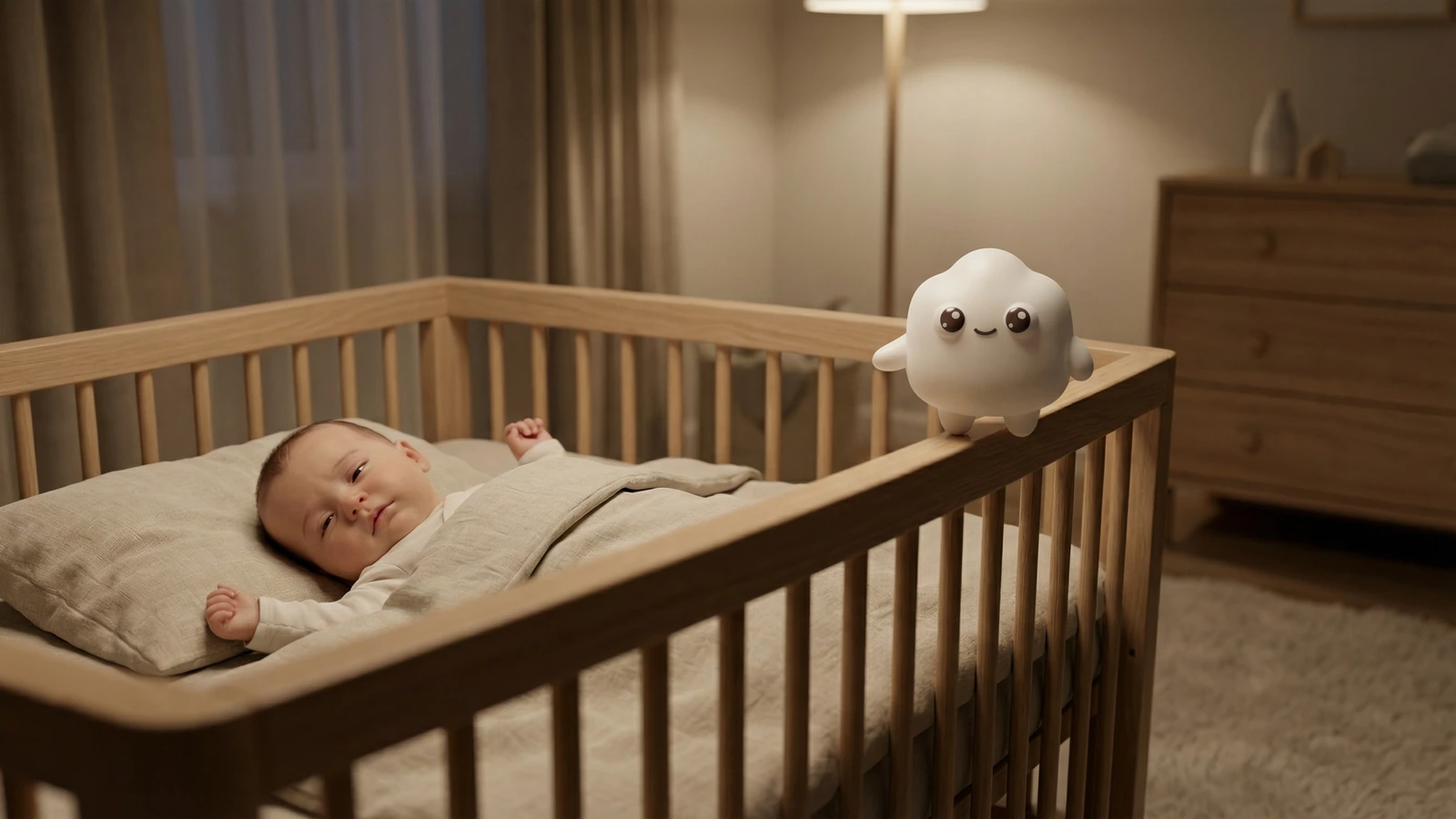
A door closes, the floor creaks, someone speaks in the next room, and suddenly you are back to square one. Some babies seem to wake up at the slightest noise, even when they had only just fallen asleep.
That does not automatically mean something is wrong. In many cases, it comes down to immature sleep cycles, sound contrast that is too sharp, or an environment that changes too much between bedtime and the rest of the night.
First, the short answer
If baby wakes up at the slightest noise, the most common reasons are usually these:
- sleep cycles that are still fragile and easy to interrupt
- sound contrast that is too sharp between silence and a sudden noise
- an environment that changes too much once baby is asleep
- a bedtime routine or sound setup that is not stable enough yet
The goal is not to create perfect silence. It is usually more helpful to make the environment more consistent and predictable from one cycle to the next.
Why some babies are so sensitive to noise during sleep
Sleep cycles are still immature
Baby sleep is more fragmented than adult sleep. Transitions between cycles are more delicate, and a sound that an adult would sleep through can be enough to trigger a full wake-up.
Sound contrast matters more than the noise itself
It is not always the absolute loudness that wakes baby. Often, it is the sudden jump between a very quiet room and a single noise: a door, hallway footsteps, plumbing, traffic, or a distant voice.
The environment changes after bedtime
If baby falls asleep in one set of conditions and then continues the night in a very different atmosphere, they may be more vulnerable to small changes. Continuity matters a lot.
What tends to help the most in practice
You do not need to redesign the whole house. The most useful move is usually to smooth the sound contrast and keep a few steady cues in place during the night.
- keep a similar atmosphere during bedtime and just after sleep starts
- reduce avoidable noise around the room when you can
- use one soft, continuous background sound at a moderate volume to reduce contrast
- if baby wakes, restart the same cue instead of piling on new stimulation
- notice whether wake-ups follow a pattern so you can adjust the routine later
What is usually better to avoid
- •trying to create total silence everywhere
- •changing sound or volume all the time
- •turning lights back on, talking more, and adding extra steps at every wake-up
- •assuming baby is simply a bad sleeper
The more the environment changes from one wake-up to the next, the harder it becomes for baby to reconnect with a simple cue. Consistency usually helps more than complexity.
When Mallow can help here
Mallow can help when you want to reduce sound contrast without turning nights into a complicated system. The value is not in automating everything. It is in keeping a stable background sound easy to start again when baby is sensitive to noise.
- •continuous soothing sounds that avoid abrupt drops into silence
- •an iPhone widget to restart the right sound in one move
- •an easier way to maintain continuity during night wakings
Frequently Asked Questions
Is it normal for a baby to wake up because of small noises?
Yes, that can be very common, especially with younger babies or during phases when sleep is lighter and more fragmented.
Should I remove every noise around baby?
No. Trying to create perfect silence is rarely realistic. It is usually more useful to reduce sharp sound contrast and keep the room atmosphere more stable.
Can background sound really help?
Yes, for some babies, because it masks sudden sound spikes and makes the environment feel more even. It is not guaranteed, but it is often one of the simplest helpful things to test.
When should I ask for medical advice?
If wake-ups change suddenly, come with unusual crying, signs of discomfort, or feel abnormal to you, it is worth checking with a professional.
Read next
View the blogExplore soothing sounds for baby
See how steady background sound can help lower sound contrast during the night.
Set up the iPhone widget
Keep the right sound ready to restart quickly during night wakings.
Soothe a crying baby at night
Continue with the use-case page focused on night wakings that keep resetting bedtime.
Choose a white noise app for baby
Compare the practical criteria if you want a simpler tool for fragmented nights.
Key cluster pages
Download Mallow on the App Store
When baby is highly sensitive to noise, a steady sound cue that is easy to restart can make nights feel more manageable over time.
Download Mallow on the App Store