
How to Calm a Crying Baby at Night: Proven Strategies That Work
When your baby cries in the middle of the night, it feels endless. Your heart races. Your exhaustion deepens. You wonder if something's wrong, or if you're doing something wrong. The truth: nighttime crying is normal. What matters is having tools ready when it happens.
This guide walks you through practical, evidence-backed ways to soothe your baby and get everyone back to sleep. Some techniques work instantly. Others take consistency. Most work better with the right support system in place.
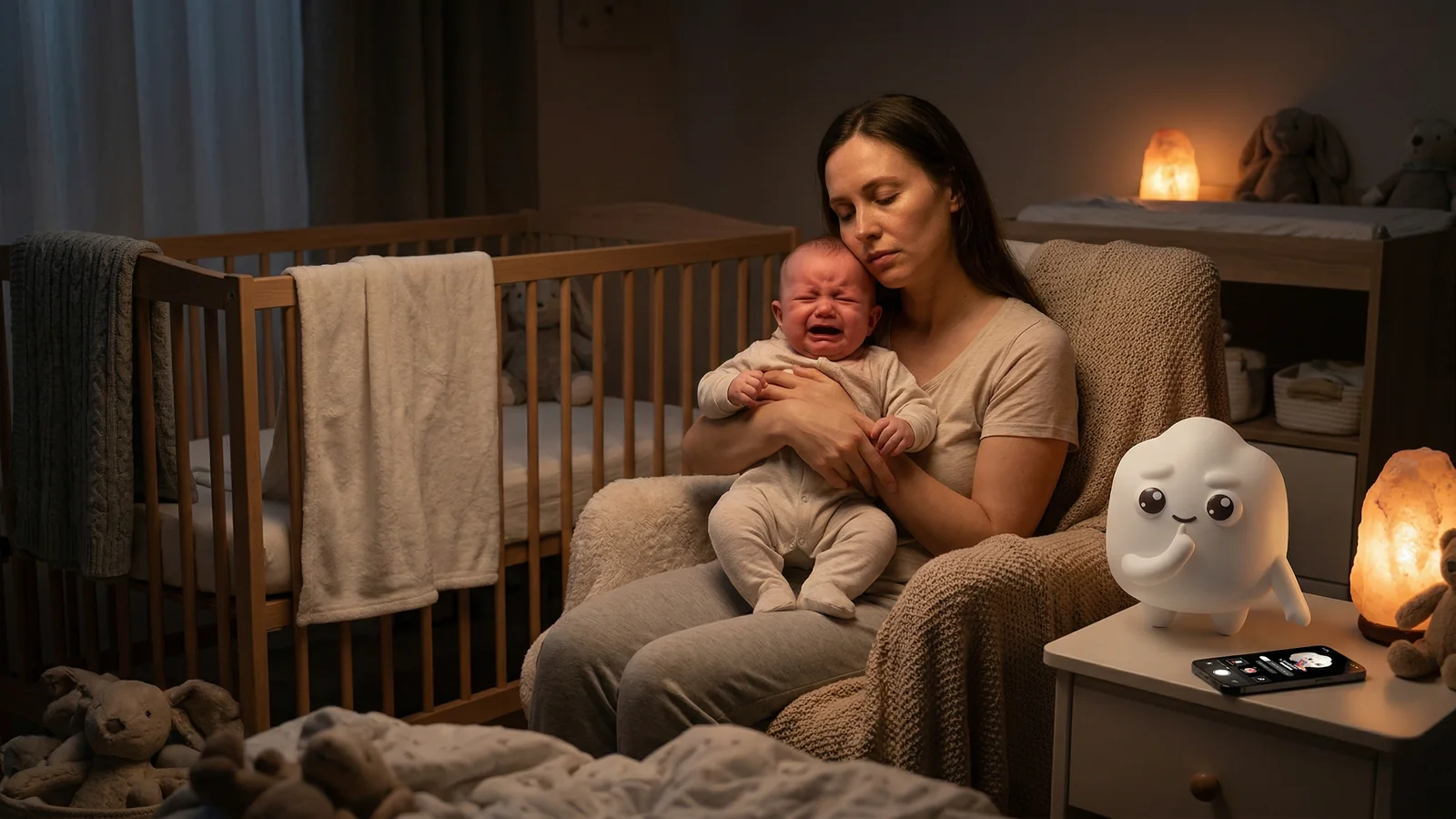
Why Babies Cry at Night (And Why It's Normal)
Newborns cry. That's their only language. At night, they cry because they're hungry, uncomfortable, overtired, or need comfort. Between 3 and 6 months, some babies develop colic—persistent crying without obvious cause—which peaks in the evening and early night. Toddlers cry when they're transitioning through sleep cycles or adjusting to changes.
Understanding why your baby cries helps you respond calmly. You're not failing. Your baby's nervous system is still developing. Your job is simply to respond with consistency and comfort.
Immediate Strategies to Soothe a Crying Baby
Check the basics first.
Before assuming your baby needs complex solutions, rule out hunger, dirty diaper, temperature discomfort, or tight clothing. Sometimes the issue is simple.
Hold and reassure.
Physical closeness works. Hold your baby upright against your chest, supporting their head and neck. Your heartbeat and body warmth signal safety. Rock gently or sway side to side. There's no timeline—hold for as long as needed.
Use white noise or soothing sounds.
Babies find continuous, consistent sound incredibly calming. It mimics the womb's environment. White noise, rainfall, or fan sounds block sudden noises that startle them awake.
Lower your environment's sensory load.
Dim the lights (or use red-tinted ones), reduce voices to whispers, and keep the room cool. Overstimulation keeps crying babies awake longer.
Try gentle movement.
Some babies settle with rocking, others with walking, swaying, or car rides. Movement regulates their nervous system.
Building a Nighttime Routine That Prevents Crying
Prevention is powerful. Babies cry less when their nervous systems feel secure and predictable.
Establish consistent bedtime.
Aim for the same sleep time each night. Consistency signals to your baby's brain that sleep is coming, reducing nighttime stress.
Create a calm wind-down.
Start 30-60 minutes before sleep. Dim lights, lower noise, change into sleep clothes, and use soothing sounds. This trains your baby's body to transition toward sleep.
Use Ghost Shusher for personalized comfort.
Record your own voice or familiar sounds that comfort your baby. Personal touches work because they carry your unique presence and calm.
When Your Baby Won't Stop Crying
If your baby cries for hours without settling, rule out pain or illness. Trust your instinct—if something feels wrong, contact your pediatrician.
If medical issues are cleared, remember: some babies are naturally more sensitive to their environment. They cry as their way of processing the world. You're doing nothing wrong.
Rotate techniques.
What works Monday might not work Wednesday. Have 3-4 strategies ready. If one isn't working after 10 minutes, switch.
Get support.
Hand off to your partner so you can step away, breathe, and reset your nervous system. Parental burnout makes everything harder. Taking 20 minutes to recover is an investment in everyone's sleep.
Technology That Helps (When You Need It)
On nights when you're reaching your limit, tools matter. Mallow offers sounds specifically chosen for baby sleep, timers to track feeding or sleep windows, and even cry detection that alerts you to changes. No need to monitor every sound.
The right app means less vigilance, more actual rest for you.
Frequently Asked Questions
How long should I let my baby cry before intervening?
This depends on your comfort and approach. Some parents use graduated response methods (waiting 5 minutes before checking). Others go immediately. There's no single right answer—choose what aligns with your values and your baby's temperament.
Is white noise safe for babies?
Yes, when used safely. Keep volume moderate (around 50-60 decibels—similar to rainfall), place the device at least 3 feet away, and don't leave it on all night long-term. Most sound machines have safe volume limits designed for babies.
When does nighttime crying usually improve?
Around 3-4 months, many babies cry less. By 6 months, sleep patterns stabilize. By 12 months, nighttime crying typically decreases significantly—though sleep regressions can cause temporary increases.
Can a white noise app really help my baby sleep through the night?
It won't guarantee it, but soothing sounds help many babies. They block sudden noises, create a consistent environment, and signal sleep time. Results vary—some babies respond immediately, others take a week to adjust.
Read next
View the blogExplore the crying-at-night use case
See the use-case page that brings sounds, fast access and continuity together.
Speed up the routine with the iPhone widget
Restart the right sound faster when baby wakes and you are already exhausted.
Read the white noise guide
Go deeper on safe volume, best practices and what different sound colors can do.
Key cluster pages
Ready for calmer nights? Download Mallow on the App Store
Track your baby's sleep patterns, use soothing sounds, and detect changes with cry detection—all without disrupting precious sleep time.
Download Mallow on the App Store